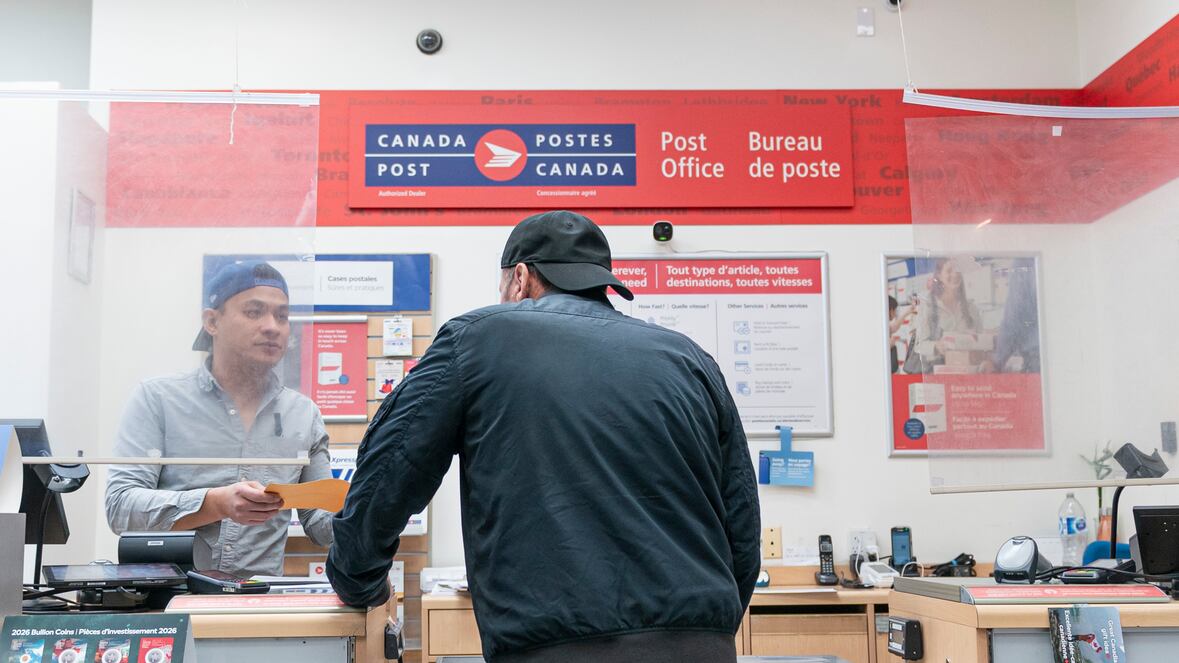




The only remaining post office in Chinatown is facing closure, a move that community members say would deal a serious blow to one of the city’s most historic neighbourhoods. Located at the corner of Main and East Hastings streets in Vancouver, the facility is scheduled to shut down on Nov. 12 as part of broader cost-cutting measures announced by Canada Post.
For organizations like the Wong’s Benevolent Association, the closure represents more than an inconvenience — it threatens a longstanding, mail-based system that has operated for generations. Founded in 1912, the association continues to rely almost entirely on traditional postal services to conduct its affairs. There is no computer in the office, according to vice-president Jeffrey Wong. Administrative tasks such as paying utility bills, corresponding with members, and organizing events are all handled through physical mail.
“We actually stamp and print out invitations and write addresses, and send them all out through the post,” Wong explained. The association’s methods reflect not only tradition but also the needs and preferences of many of its members, some of whom are seniors more comfortable with paper correspondence than digital platforms.
The impending closure has prompted a community campaign aimed at preserving the post office, which supporters describe as a “lifeline.” A petition circulating in the neighbourhood argues that the facility serves some of Vancouver’s most vulnerable and marginalized residents, including low-income individuals, seniors, and people without reliable internet access. For many, the post office is essential for receiving government cheques, sending important documents, paying bills, and maintaining connections with family members abroad.
Chinatown has experienced significant change over the past decade, including business closures, redevelopment pressures, and demographic shifts. Advocates say removing the final postal outlet would further erode the infrastructure that sustains long-standing community networks. They contend that in a neighbourhood where digital literacy and access vary widely, the physical post office remains critical public infrastructure.
In a statement, Canada Post said its retail operations and business decisions undergo an extensive review process to evaluate customer needs, usage levels, and financial sustainability. The corporation has faced mounting fiscal pressures in recent years, citing declining letter mail volumes and increasing operational costs. As part of its restructuring strategy, it has reviewed underperforming outlets across the country.
However, critics argue that a purely financial assessment fails to capture the social and cultural significance of certain locations. In Chinatown, the post office functions not only as a service counter but also as a point of connection in a neighbourhood rooted in more than a century of immigrant history.
Wong said the loss would have immediate and practical consequences for organizations like his, which operate without digital infrastructure and rely on consistent, accessible postal service. Community members are urging Canada Post to reconsider the closure or explore alternative arrangements that would maintain service in the area.
As the Nov. 12 deadline approaches, supporters continue to rally, emphasizing that for many residents of Chinatown, the post office is not simply a convenience — it is an indispensable link to essential services and to one another.
Show your businesses to the Filipino Community in British Columbia and the world